Written by Katherine Kessler in collaboration with psychologist Beth Capecchi
As the days grow shorter and the temperature drops, many of us find our mood shifting along with the season. While it’s natural to want to cozy up indoors, for some, the winter months bring more than just a craving for comfort – they bring Seasonal Affective Disorder (SAD). If you’re someone who notices a dip in your mental health as the leaves start to fall, now is the time to take proactive steps.
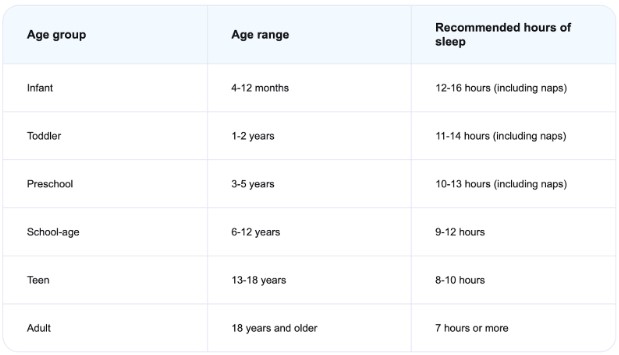
We often overlook how simple daily healthy habits, such as nourishing our bodies or getting sufficient rest, can significantly improve our well-being and reduce the risk of developing anxiety, depression, or experiencing a breakdown. Start implementing these strategies this fall to prepare your mind and body for the winter ahead.
Seasonal Affective Disorder (SAD) is a type of depression that occurs at the same time each year, most commonly in the winter. To be diagnosed with SAD, this pattern must occur for at least two consecutive years and last several months. While it shares many symptoms with typical depression, such as feelings of sadness, anxiety, hopelessness, anhedonia, and fatigue, SAD has distinct characteristics.
According to the National Institute of Mental Health, millions of Americans are affected by SAD, with symptoms often emerging in young adulthood. Unfortunately, many people may not realize they have it, dismissing their symptoms as just “winter blues.”
Several factors contribute to the onset of SAD:
The body may also ‘remember’ previous winter depressions, associating colder weather and shorter days with depressive symptoms. As Dr. Bessel van der Kolk explains in The Body Keeps the Score, our bodies can store memories of past trauma or stress, which can resurface during similar conditions, like the transition to winter.
To prepare for and potentially prevent the effects of SAD, we spoke with Beth Cappechi, Ph.D. about incorporating these essential habits into your routine this fall:

Are you doing all the right things and still not feeling the benefits? It might be time to have a chat with our Care Team at Scenic City Neurotherapy. Treatments such as Minimally Stimulated Ketamine Infusion Therapy (MSKIT®) and Transcranial Magnetic Stimulation (TMS) can support your brain’s physiology, enhancing neuroplasticity and ensuring that your healthy daily habits yield the positive results they should. Take it from our patient, Rick, who suffered from PTSD:
“If I could boil this down to one overriding thought of what the ketamine has done, it is this: I learned how to change my mind. All of the other things that I’ve been doing – meditation, yoga, better diet, controlling drinking, exercise – all of it suddenly started to work, and I was getting results. I can say now that 2022 is the best year of my life so far. I finally have a lasting sense of well-being and peace.”
Your journey toward better mental wellness begins today with small yet meaningful steps toward a better tomorrow.
Minimally Stimulated Ketamine Infusion Therapy (MSKIT®) and Transcranial Magnetic Stimulation (TMS) are powerful tools for treating conditions like depression, anxiety, and PTSD by optimizing the way the brain communicates and promoting neuroplasticity – the brain’s ability to reorganize itself and form new connections. However, for these changes to lead to lasting improvement in mental health, they should be followed up with psychotherapy.
In psychotherapy sessions following treatment, patients work with a therapist to learn positive coping skills and develop better daily habits. This combination promotes positive changes in feelings, thoughts, and behaviors, maximizing the benefits of ketamine therapy and leading to more sustainable and profound improvements in mental health.
While it’s natural to want to nest during the winter, it’s important to recognize when these tendencies are becoming problematic. By taking proactive steps now, you can limit the impact of SAD and enjoy a more balanced, fulfilling winter season. Remember, taking care of your mental health is just as important as taking care of your physical health.
For more information or support, consider reaching out to our Care Team or Beth Capecchi. Don’t hesitate to seek help if you need it. Your well-being is worth it.
Beth Capecchi is a licensed psychologist and has been in private practice for the past 20 years, working with adolescents and adults. She is married and has three teenagers. Beth enjoys working with a variety of issues, including relationship issues, self-esteem, anxiety, depression, family issues, grief, addiction issues, family of origin issues, trauma work, and more.
She founded Grounded Counseling in 2013. In March 2021, she launched the mental health podcast Never Perfect with an ADHD psychologist, and Charles Miller from Scenic City Neurotherapy was featured in one episode. In March of this year, she launched a faith podcast called Never Perfect Faith. Check out her website neverperfect.org for more information.
Founded in 2019, Scenic City Neurotherapy is at the forefront of advanced and comprehensive treatments for those facing treatment-resistant conditions. Our goal is to excel in opioid free pain management and mental health treatment, setting a standard of care that results in better outcomes and improved brain health. We specialize in Minimally Stimulated Ketamine Infusion Therapy (MSKIT®) and Transcranial Magnetic Stimulation (TMS) Therapy.
If you’re seeking innovative solutions for mental health, chronic pain, or neurodegenerative conditions, Scenic City Neurotherapy offers transformative treatment options. Join us in advancing brain optimization and empowering individuals to reclaim their lives.
Contact Charles Miller, Founder and Chief Medical Officer, to learn more about our Minimally Stimulated Ketamine Infusion Therapy (MSKIT®) and Transcranial Magnetic Stimulation (TMS) protocols. Call 423-228-0579 or visit www.ScenicCityNeuro.com.
Feeling trapped in your own mind, endlessly repeating the same habits and behaviors without understanding why, can be a vicious cycle. It can be frustrating and disheartening constantly wondering if change will ever be possible.
Understanding neuroplasticity offers a turning point. Neuroplasticity is the brain’s incredible ability to adapt and change throughout life by forming new neural connections. This adaptability is crucial for learning new skills, recovering from injuries, and adjusting to new situations.
Neuroplasticity can be broadly classified into two types: structural and functional plasticity.
Neuroplasticity is driven by various factors, including learning, experience, injury, and even environmental changes. It is essential for recovery after brain injuries, such as strokes, and plays a significant role in developmental processes, such as language acquisition and skill development.
When you feel stuck, it’s easy to believe that change is impossible. However, neuroplasticity shows us that the brain can adapt and change at any age. This means that no matter how ingrained your habits or thought patterns are, you can rewire your brain to support new, healthier behaviors and ways of thinking.
Two promising techniques that have garnered attention for their ability to enhance neuroplasticity are Ketamine Infusion Therapy (KIT) and Transcranial Magnetic Stimulation (TMS). These therapies are especially beneficial for individuals struggling with emotional regulation, decision-making, learning, memory, trauma resolution, and mood stabilization.
Ketamine Infusion Therapy (KIT)
Ketamine, traditionally known as an anesthetic, has shown proven results in promoting neuroplasticity, particularly in the treatment of depression and other mental health conditions. KIT involves the administration of ketamine in controlled, low doses over a period of time.
Transcranial Magnetic Stimulation (TMS)
TMS is a non-invasive technique that uses magnetic fields to stimulate nerve cells in the brain. It has been widely studied for its potential to enhance neuroplasticity and is commonly used in the treatment of depression.
Taking the First Step Toward Change
Change can feel overwhelming, but understanding that your brain is capable of adapting and forming new connections provides a powerful tool for overcoming this feeling. Embracing techniques like KIT and TMS can support your journey toward better brain health, mental health, and personal growth.
Remember, small steps lead to sustainable, meaningful changes. By leveraging the power of neuroplasticity, you can create a new path for yourself, one that leads to a healthier, more fulfilling quality of life. Embrace the potential for change within you and take action today.
Schedule your no-cost consultation online or call our Care Team at 423-228-0579.
Want to learn more about the incredible power of neuroplasticity? Check out our YouTube video below.
The continuation of Matthew Perry’s tragedy, with new details emerging as of August 15, highlights the severe consequences of provider malpractice, the dangers of illegal drug use, and the perilous combination of multiple treatment factors.
As a leading provider of innovative mental health treatments, including ketamine infusion therapy, Scenic City Neurotherapy believes its imperative to address the latest developments. The charges filed against five individuals, including medical professionals, drug dealers, and Perry’s staff, reinforce the critical need to adopt and enforce standards of care for ketamine therapy to guarantee patient safety, comfort, and optimal treatment outcomes.
News reports indicate the major contributing factor in Matthew Perry’s tragic death was the excessive amount of ketamine involved. This high dosage, combined with the use of a hot tub and other circumstances, contributed to his untimely passing. The malpractice related to administering such a high dose of ketamine intensifies our ongoing concern regarding providers who prioritize profit over patient safety and outcomes. Additionally, it reinforces our concerns about the safety of ketamine use at home versus a clinical setting, as outlined in our previous statement.
“A medical provider’s primary obligation is to adhere to the principle of ‘do no harm.’ Accordingly, we are committed to never prescribing or administering ketamine in amounts that exceed safe and appropriate levels for any individual,” says Charles Miller, Owner and Founder of Scenic City Neurotherapy. Perry’s story further highlights the urgent need to adopt and enforce the minimum standards of care we’ve developed for ketamine infusion centers. These standards, referred to as Minimally Stimulated Ketamine Infusion Therapy (MSKIT®), include:
Our Minimally Stimulated Ketamine Infusion Therapy (MSKIT®) protocols are designed to ensure that ketamine is used responsibly, with constant monitoring by ethical and experienced medical staff.
Scenic City Neurotherapy remains committed to providing safe, effective, and compassionate care, grounded in peer reviewed research and guided by a deep commitment to the well-being of its patients. To further our commitment, we host monthly provider education sessions and have built our website as a comprehensive Education and Information Hub. We will continue to advocate for the responsible use of ketamine and lead efforts to educate the public on the differences between best-practice medical use and misuse.
Founded in 2019, Scenic City Neurotherapy is at the forefront of advanced and comprehensive treatments for those facing treatment-resistant conditions. Our goal is to excel in opioid free pain management and mental health treatment, setting a standard of care that results in better outcomes and improved brain health. We specialize in Ketamine Infusion Therapy and Transcranial Magnetic Stimulation (TMS) Therapy.
If you’re seeking innovative solutions for mental health, chronic pain, or neurodegenerative conditions, Scenic City Neurotherapy offers transformative treatment options. Join us in advancing brain optimization and empowering individuals to reclaim their lives.
Contact Charles Miller, Founder and Chief Medical Officer, to learn more about our Minimally Stimulated Ketamine Infusion Therapy (MSKIT®) and Transcranial Magnetic Stimulation (TMS) protocols. Call 423-228-0579 or visit www.ScenicCityNeuro.com.
Editor’s Note: This blog was updated on August 16th to include the latest information regarding Matthew Perry’s death.
“It’s difficult to get a man to understand something when his salary depends on not understanding it.” – Upton Sinclair
When this blog was first written, based on the available information, it was reasonable to believe that the medication Matthew Perry took was in line with typical prescribing practices. Initially linked to at-home ketamine use for mental health concerns, it’s important to address the increasing trend of ketamine prescribed for at-home self-administration. While ketamine therapy, when administered in a controlled and supervised environment at appropriate doses, is a safe option for those facing challenging mental health conditions, the move towards at-home use—whether prescribed or not—introduces significant risks. As an advocate for patient well-being and responsible medical practices, I’ve always strongly advised against attempting to use ketamine without proper medical supervision.
Based on the details that emerged on August 15th, it is now understood that Perry’s death resulted from a combination of factors, including provider malpractice, illegal drug use, and the dangerous interplay of multiple treatment elements, such as the unsupervised setting of his hot tub. Confirmation bias, such as assuming that since nothing bad happened last time, nothing bad can happen this time, may have played a role in this tragic event.
Numerous companies and providers, both in Chattanooga and nationwide, are prescribing sublingual doses ranging from 150 mg to 1600 mg per administration to address poor absorption. This practice significantly amplifies the associated risks. Sublingual absorption of medications is notably poor (around 10-30%). With ketamine, the effects of a 1200 mg sublingual dose is equivalent to the effects of a much lower IV ketamine dose (150-200 mg), which, while still high, is not typically lethal. Matthew Perry’s untimely death was avoidable and unnecessary, emphasizing the critical need for medical supervision with all ketamine administration.
Matthew Perry’s case highlights a significant concern – certain companies insist that using ketamine at home is as safe as supervised administration in a clinic. However, closer scrutiny reveals that such assertions lack any scientific support. Despite these companies boasting the ease and cost-effectiveness of at-home ketamine use, it is imperative to consider the increased risks and the lack of efficacy with sublingual administration of ketamine. It is not only significantly more dangerous but it also has the lowest chance of success when compared to any other administration modality.
The escalating instances of injuries and fatalities linked to DIY ketamine use underscore serious ethical concerns. It is disconcerting to witness some providers downplaying these risks, leaving patients insufficiently informed. Convenience should not take precedence over patient safety and treatment effectiveness. Providers utilizing this modality do so either out of greed or ignorance. While the sublingual ketamine model does offer a financial incentive and is far less labor intensive for the provider, we find that most of those prescribing at-home ketamine are well meaning. They simply are ignorant of the many risks associated with rapid acting anesthetics like ketamine. Also, the legality of at-home ketamine use gives a false sense of security, but technical legality does not equate safety or appropriateness.
In conclusion, Matthew Perry’s tragic story serves as a poignant reminder of the severe consequences associated with DIY ketamine use. It is imperative for the scientific and medical community to vehemently discourage any form of at-home ketamine use and advocate for responsible, medically supervised administration. Our commitment to those seeking help must prioritize treatments that are not only effective but, above all, safe.
About Scenic City Neurotherapy
Founded in 2019, Scenic City Neurotherapy is at the forefront of advanced and comprehensive treatments for those facing treatment-resistant conditions. Our goal is to excel in opioid free pain management and mental health treatment, setting a standard of care that results in better outcomes and improved brain health. We specialize in Ketamine Infusion Therapy and Transcranial Magnetic Stimulation (TMS) Therapy.
If you’re seeking innovative solutions for mental health, chronic pain, or neurodegenerative conditions, Scenic City Neurotherapy offers transformative treatment options. Join us in advancing brain optimization and empowering individuals to reclaim their lives.
Contact Charles Miller, Founder and Chief Medical Officer, to learn more about our Minimally Stimulated Ketamine Infusion Therapy (MSKIT®) and Transcranial Magnetic Stimulation (TMS) protocols. Call 423-228-0579 or visit www.ScenicCityNeuro.com.
by Charles Miller CRNA
Introduction
In this blog, we will learn about how good nutrition and overall health can make ketamine infusion therapy more effective for treating mental health issues and chronic pain. We will cover how physical health affects treatment, the importance of the gut-brain connection, and ways to optimize your health to improve ketamine therapy results. By the end, you’ll understand how a holistic approach to health can help your brain respond better to treatment.
Ketamine infusion therapy has emerged as a promising treatment for various mental health conditions and chronic pain. But how important is good nutrition in making these treatments work better? Many providers sell supplement capsules with amino acids or coenzymes, saying they help the treatments work better. However, these claims aren’t strongly supported by current research.
Clinical observations strongly suggest that improving overall physical health, including nutrition and exercise, can significantly enhance the therapeutic outcomes of ketamine infusions.
Good physical health is important for successful ketamine therapy. Eating well and exercising regularly help maintain overall health and support the body’s physiological processes. Proper nutrition provides essential building blocks for key proteins like Brain-Derived Neurotrophic Factor (BDNF) and Glycogen Synthase Kinase-3 Beta (GSK3B). These proteins are crucial for global brain health and function, influencing neuroplasticity, mood regulation, and cognitive function.
By enhancing the synthesis of these proteins, good nutrition can support the brain’s capacity to respond positively to ketamine treatment.
There’s a significant amount of misinformation about the gut-brain connection, but it does play a large role in brain health. The gut, the second largest organ in the body, is important for overall health. One way it affects brain health is by controlling inflammation. Chronic inflammation is a common factor in many brain conditions. Inflammation in the brain, especially in areas like the dorsolateral prefrontal cortex, can impair the brain’s ability to process stimuli, which is detrimental to mental health.
Chronic inflammation can come from various sources, like overactive neurons as seen in PTSD or chronic emotional stress, viral infections, or systemic chronic inflammatory diseases.
Managing and reducing inflammation through good nutrition can potentially mitigate its negative impact on brain function and enhance the efficacy of ketamine infusion therapy.
If nutrition plays a role in ketamine infusion therapy, it is by providing a diverse array of nutrients that serve as building blocks for the body and brain. A balanced diet rich in essential vitamins, minerals, and other nutrients supports overall health and can make ketamine treatment work better. This approach doesn’t rely on specific supplements with unproven claims but focuses on a holistic view of health, emphasizing the importance of a nutritious diet and regular physical activity.
While supplement capsules marketed to enhance ketamine therapy may lack strong evidence, there is a clear and overwhelming indication that improving physical health through adequate nutrition and exercise supports the brain’s ability to respond to treatment. Reducing chronic inflammation through diet can also improve treatment outcomes, making a comprehensive approach to health crucial for ketamine infusion therapy for mental health and chronic pain management.
Brain-Derived Neurotrophic Factor (BDNF) and Glycogen Synthase Kinase-3 Beta (GSK3B)
BDNF plays a critical role in neuroplasticity, which is essential for learning, memory, and the therapeutic effects of various treatments, including ketamine. Exercise and proper nutrition can enhance BDNF levels.
GSK3B is involved in various cellular functions, including inflammation and cell survival, and its dysregulation is linked to neurodegenerative diseases.
The gut-brain axis is a complex communication network that links the gut and brain, and chronic inflammation in the gut can affect brain health and function.
Chronic inflammation is implicated in neurodegenerative diseases and can be influenced by diet and gut health.
Conclusion
Learning about how good nutrition and overall health can enhance ketamine infusion therapy can help you achieve better treatment results. By focusing on a balanced diet and regular exercise, you can support your brain’s ability to respond positively to ketamine treatment.
At Scenic City Neurotherapy, we support you on your journey to healing, offering individualized and compassionate care in Chattanooga. Let’s work together to help you achieve better mental health and well-being. Call our care team at 423-228-0579 to schedule a no-cost consultation.
Trauma can affect anyone, regardless of age or stage in life. From the innocent vulnerability of childhood to the complex challenges of adulthood, trauma – much like mental health stigma – knows no boundaries. It can be a silent intruder, reshaping how we think, feel, and interact with the world.
At Scenic City Neurotherapy, we aim to change the conversation around mental health. Our mission is to help individuals understand that mental illness results from trauma or prolonged stress. These conditions are genuine brain health issues that can be treated and managed effectively.
In this blog, we will explore:
First, let’s delve into the various forms of trauma, extending beyond significant life events, to understand the broad spectrum of experiences that can lead to mental health challenges.
Trauma isn’t always a single, significant event. It can also stem from prolonged stress, such as relentless work pressure or more minor stressors that gradually wear down the brain. These seemingly “insignificant” stressors, when left unaddressed, can accumulate and contribute to the development of trauma in the brain.
For example, consider the aftermath of a car accident. A minor collision may not seem significant on its own, but for someone already burdened with high-stress levels or past traumas, it can become a tipping point. Trauma often accumulates slowly, clouding thoughts, destabilizing emotions, and disrupting daily functioning.
Understanding the intricate workings of our brain, as explored in Francine Shapiro’s “Getting Past Your Past: Take Control of Your Life with Self-Help Techniques from EMDR Therapy,” sheds light on how these seemingly minor stressors can profoundly impact our well-being.
Trauma, whether from a single event or prolonged exposure to distress, leaves a lasting imprint on the brain. It’s not just about emotional scars; trauma physically alters brain structures and functions, leading to mental illnesses such as PTSD, anxiety, and depression.
When the brain experiences trauma, it can develop lesions or “dark spots,” disrupting communication within the brain. These lesions interfere with normal brain function, making it difficult for individuals to process emotions, think clearly, or respond appropriately to stress. This can manifest in various ways:
Understanding these manifestations is crucial, but it’s equally important to recognize the underlying causes of these symptoms. This highlights a significant misconception in psychiatry: confusing symptoms with the underlying disease.
In his blog, “Treating the Symptoms vs. Treating the Disease,” MSKIT® expert Charles Miller highlights an essential misconception in psychiatry: the confusion of symptoms with the underlying disease.
Think about this: what is the primary focus of psychiatrists’ treatment? You might quickly point to depression. However, this perception is rooted in an outdated theory known as the Serotonin Hypothesis. It’s crucial to acknowledge that depression is merely a symptom, not the underlying disorder itself.
While psychiatrists traditionally prescribe medications to address symptoms such as depression, advancements in imaging technologies have significantly enhanced our understanding of how mental illness manifests within the brain.
Depression is not the disease itself; instead, it’s a symptom indicating a more significant underlying issue. This primary issue, the root cause, lies in the breakdown of communication within the brain, manifesting as depression, anxiety, or PTSD. It’s clear that addressing this brain breakdown, stemming from prolonged stress or trauma, is essential for effectively treating mental illness.
Unfortunately, antidepressants are unable to achieve this effectively.
For years, antidepressants have targeted neurotransmitters, attempting to improve communication between brain cells. However, this approach has limitations because it does not repair the neuronal pathways the neurotransmitters must travel.
Imagine neurotransmitters as cars and neuronal pathways as roads: just like adding cars to a closed road creates congestion, antidepressants attempt to increase neurotransmitter activity in obstructed pathways. To truly address the issue, we must first open these pathways, as illustrated below.
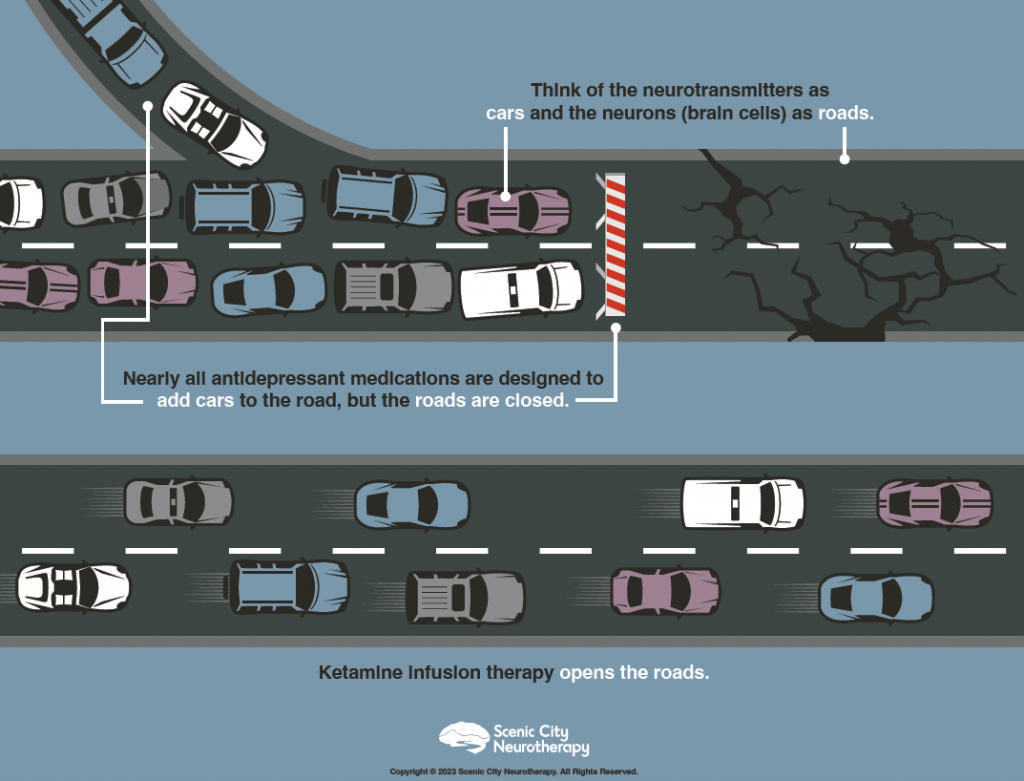
Neurotherapies such as MSKIT® and TMS act as catalysts for brain healing. These therapies promote the growth of new neurons and repair damaged neurons, targeting the underlying causes of depressive symptoms. By doing so, they provide a genuinely effective approach to treating conditions previously deemed chronic and reliant solely on medication management.
Interestingly, the very limitation of these treatments is also their greatest asset.
MSKIT® and TMS work by increasing brain-derived neurotrophic factor (BDNF) levels, a protein that plays a crucial role in neuroplasticity. As explained by Charles Miller:
“BDNF is not just a support protein for neuron health. It is intricately linked to major brain functions and mood disorders, with direct implications for therapeutic interventions in psychiatry.”
Neuroplasticity allows the brain to reorganize pathways, create new connections, and even create new neurons. It’s a natural process that helps us:
It aids in healing the brain after trauma or prolonged stress, supporting mood regulation, functionality, and adaptation to our surroundings.
In my conversation with Charles Miller, he explained how understanding how neuroplasticity affects mood regulation and overall mental health can empower someone struggling to change their habits and actions.
Neuroplasticity, the brain’s ability to change and adapt, operates by optimizing synaptic connections, where neurotransmitters like serotonin, dopamine, and norepinephrine are vital players.
He said to think of it like this:
“When your brain undergoes positive changes in areas rich in brain-derived neurotrophic factor (BDNF), such as the hippocampus and prefrontal cortex, your mood tends to improve, and you become more adaptable to stress. BDNF fosters the growth of new neurons and synapses, which is essential for overcoming mood disorders like depression.
But neuroplasticity isn’t just about mood; it’s also about functionality and adaptation. When you face new challenges, your brain’s plastic nature allows it to refine neural pathways to better handle similar situations in the future. This adaptability isn’t just for short-term gains; it’s about long-term survival strategies. By enhancing your brain’s adaptability, you become better equipped to navigate life’s complexities and reduce emotional reactivity.”
Understanding how your brain can change and adapt gives you the power to take control of your habits and actions. You can reshape your brain to support positive change and emotional well-being with effort and persistence.
So, don’t be discouraged by setbacks; instead, see them as opportunities for your brain to learn and grow.
While MSKIT® and TMS enhance neuroplasticity, providing the foundation for a better quality of life, the healing journey also requires active participation from the individual.
The following books offer valuable insights and techniques for leveraging new neuronal connections.
“The Body Keeps the Score” by Bessel van der Kolk
Bessel van der Kolk, drawing on over thirty years of research and clinical practice, reveals how trauma reshapes the brain and body, leading to impaired emotional regulation, concentration, memory, trust, and comfort within one’s own body.
This book teaches you how to regain control and harness your brain’s natural ability to heal, rebuilding the capacity to understand and feel your life’s experiences fully.
“How to Do the Work” by Nicole LePera
Dr. Nicole LePera’s book guides you toward a healthier, happier life by helping you break free from self-destructive patterns. Through her insights, you’ll better understand how childhood experiences impact your mental and physical health and uncover the root causes of your self-sabotaging behaviors.
Dr. LePera then teaches you how to develop positive habits that enhance your well-being, empowering you to take control and improve your quality of life.
“Getting Past Your Past” by Francine Shapiro Francine Shapiro’s book is best summarized by the Publisher: “Whether we’ve experienced small setbacks or major traumas, we are all influenced by memories and experiences we may not remember or don’t fully understand. ‘Getting Past Your Past offers practical procedures that demystify the human condition and empower listeners looking to achieve real change.”
Francine Shapiro is the developer of EMDR (Eye Movement Desensitization and Reprocessing) therapy, a powerful technique for processing traumatic memories. You will learn actionable strategies that can complement professional therapy, aiding in resolving trauma-related symptoms. While this book provides valuable insights into the EMDR process, it is not a substitute for professional therapy.
Bonus Read: “What My Bones Know” by Stephanie Foo
Stephanie Foo wrote a beautiful memoir about her journey of healing from complex trauma. Her “What My Bones Know” narrative offers a powerful account of living with and overcoming trauma.
Here’s an insightful excerpt from the book:
“For the past two years, I had felt some form of shame whenever I was not in a state of blissed-out gratitude and appreciation. But Dr. Ham told me these negative emotions are not simply something to endure and erase. They are purposeful, beneficial. They tell us what we need. Anger inspires action. Sadness is necessary to process grief. Fear helps keep us safe. Completely eradicating these emotions is not just impossible; it’s unhealthy… True mental health looks like a balance of these good and bad feelings.”
At Scenic City Neurotherapy, we strive to change how people think and talk about mental health. By recognizing mental illness as a brain health condition, we can break the stigma and encourage more individuals to seek the help they need.
Trauma doesn’t have to define your life. With the proper treatment and support, it can become just one part of your story – one you can heal from, allowing you to build a future characterized by agency and well-being.
By understanding the impact of trauma on the brain and utilizing therapies that promote neuroplasticity, you can reclaim control over your mental health and navigate life’s challenges with a renewed sense of purpose.
If you’re struggling with the effects of trauma, remember that help is available. At Scenic City Neurotherapy, we support you on your journey to healing, offering innovative treatments and compassionate care. Let’s work together to optimize your brain and daily routines, creating a healthier future.
