
In-Clinic Ketamine Therapy vs. At-Home Ketamine Therapy: What’s Safer, More Effective, and Backed by Evidence?
By Charles Miller, CRNA, CMO, Founder/Owner of Scenic City Neurotherapy
In-clinic ketamine, specifically Minimally Stimulated Ketamine Infusion Therapy (MSKIT®), is generally regarded as safer, more controlled, and more clinically consistent than at-home ketamine.
At-home ketamine carries high risks of misuse (55% report accidental or intentional overuse), life-threatening events, inconsistent outcomes, and no medical supervision or emergency response. In contrast, in-clinic IV ketamine therapy provides precise dosing, continuous medical monitoring, and evidence-based protocols that are designed to mitigate risk and lead to reproducible, long-term outcomes.
Minimally Stimulated Ketamine Infusion Therapy (MSKIT®) was designed to minimize stimulation, optimize dosing, and support long-term neuronal regrowth. This protocol directly addresses every risk that makes at-home ketamine unpredictable and unsafe.
In-Clinic Ketamine Therapy vs. At-Home Ketamine Therapy: What’s the Difference?
At-Home Ketamine Therapy
At-home ketamine is typically taken as lozenges or tablets, shipped after a brief telehealth evaluation.
- Bioavailability ranges from 10–30%, causing variable absorption and unpredictable blood levels.
- Limited ability to precisely control dosing, which may reduce the likelihood of consistent therapeutic levels required for neurological benefit.
- No supervision or emergency response; no trained professional present to manage events like laryngospasm (airway closure).
- Limited evidence base or standardized protocols, likely making effectiveness and outcomes inconsistent.
This model often emphasizes convenience, which may come at the expense of patient safety or treatment success.
In-Clinic Ketamine Therapy
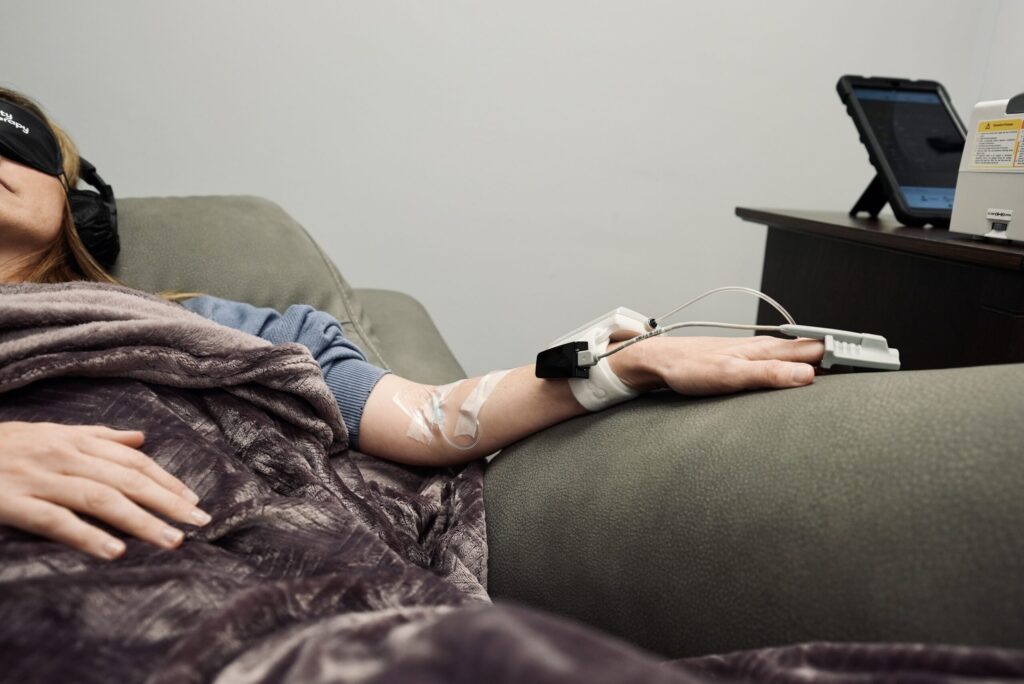
In-clinic ketamine therapy, specifically Minimally Stimulated Ketamine Infusion Therapy (MSKIT®), uses IV administration, after a thorough intake process with our Care Team.
- 100% bioavailability, with the full dose entering the bloodstream for immediate therapeutic effect.
- Precisely measured and controlled dosing tailored to individual needs.
- Continuous monitoring by medical professionals who can manage adverse effects and adjust or stop the infusion as needed.
- Backed by extensive research with documented clinical benefit for depression and chronic pain, using refined, evidence-based dosing protocols.
This protocol produces mappable, measurable neurological changes, which are difficult to replicate at home.
Why In-Clinic Ketamine Therapy Is Safer
1. At-Home Ketamine Has Documented High Misuse Rates
- 55% of Americans using at-home ketamine report accidental or intentional overuse.
Source: Psychiatric Times
This misuse increases the risk of severe side effects, including respiratory depression and elevated blood pressure.
In contrast, MSKIT® uses optimal dosing tailored to your unique needs and infrequent administration, eliminating the possibility of self-misuse entirely.
2. FDA Has Issued Explicit Warnings Against At-Home Ketamine Use
The FDA warns against the use of compounded ketamine products without supervision of:
- sedation
- dissociation
- changes in vital signs
- serious adverse events
Source: FDA
In-clinic ketamine therapy directly addresses every one of these risks through:
- patient education
- continuous monitoring
- established science-driven protocols
- medically controlled environments
3. Real-World Incidents Show the Danger of Unsupervised Ketamine Use
Matthew Perry (2023)
Died due to the effects of ketamine while sitting in a hot tub at home – no controlled environment, no supervision, no monitoring.
Source: New York Post
This case shows how misjudgments at home can have fatal consequences.
Sophie Russell (UK)
Chronic unsupervised ketamine use led to debilitating pain, bladder dysfunction, and death at age 20.
Source: The Scottish Sun
These incidents further emphasize why MSKIT® exists: to administer ketamine safely, predictably, and ethically.
It’s crucial to share insights from those who have firsthand experience with at-home ketamine use. In our blog, we present testimonials compiled by our Care Team, who have listened to and documented the experiences of individuals undergoing at-home ketamine therapy.
4. Clinical Recommendations Strongly Favor In-Clinic Administration
Ethical medical professionals advocate for the following guidelines:
- Ketamine should be administered in controlled settings
- Patients require monitoring for adverse reactions
- Standardized dosing is essential
MSKIT® at Scenic City Neurotherapy follows these clinical recommendations exactly, which is why in-clinic ketamine therapy produces far superior and safer outcomes than any at-home model.
Comparison: In-Clinic Ketamine Therapy vs. At-Home Ketamine Therapy
| Variable | At-Home Ketamine | In-Clinic Minimally Stimulated Ketamine Infusion Therapy (MSKIT®) |
| Dosing Precision | Low | Exact, controlled, IV titration |
| Safety Monitoring | None | Continuous medical monitoring |
| Neuroplastic Benefit | Limited and inconsistent | Evidence-based psychoplastogenic treatment |
| Risk of Misuse | High (55% misuse) | Zero – clinician administered |
| Adverse Event Response | None | Immediate medical intervention available |
| Long-term Outcomes | Variable | Clinically reproducible results |
At-home ketamine may create temporary relief for some people, but it may not consistently replicate the neurological benefit and long-term clinical outcomes of MSKIT® as administered at Scenic City Neurotherapy in Chattanooga, TN.
Why Protocol Matters
Ketamine is not just a medication. It’s a treatment process. Just like one chemotherapy treatment cannot reverse cancer, one ketamine infusion may not create the neural changes necessary for long term healing.
Yale’s Department of Psychiatry has shown that a series of six infusions over three weeks increases neuroplasticity in most patients. By delivering infusions as a structured series, patients may progressively rebuild neural pathways and strengthen healthier brain circuits.
Minimally Stimulated Ketamine Infusion Therapy (MSKIT®) is a medically supervised treatment process. The therapeutic outcome depends on:
- administration route
- precise dosage
- safety and monitoring
- environment
- patient education
MSKIT® was designed so that each variable is key to reaching and maintaining therapeutic blood levels, widely considered as essential for treatment success and comfort.
Conclusion: Why In-Clinic IV Ketamine Therapy Should Be the Standard
When people look up “in-clinic vs at-home ketamine,” they’re trying to understand: Is the convenience worth the risk?
The evidence says: the risks and benefits should be carefully considered.
At-home ketamine carries higher risks of misuse, life-threatening events, addiction, and medical complications.
In contrast, Minimally Stimulated Ketamine Infusion Therapy (MSKIT®) provides an ethical, safe, and effective approach rooted in evidence and science.
This is why patients travel to Scenic City Neurotherapy from across the country. They want structured results and medically supervised care, not risks.
FAQ:
Is at-home ketamine safe?
Short answer: It carries higher risks compared to medically supervised administration. At-home ketamine has high misuse rates (55%), no monitoring, and elevated risk of life-threatening events. In-clinic ketamine infusion therapy eliminates these risks through controlled dosing, continuous monitoring, and immediate clinical support during administration.
Are there telehealth services that provide ketamine treatment for home use?
Short Answer: Yes, several telehealth companies prescribe ketamine lozenges for at-home use, typically after a brief virtual evaluation. But these services do not provide continuous monitoring, controlled dosing, or immediate clinical support during administration, which is statistically documented to increase risk.
Telehealth platforms often rely on compounded ketamine shipped directly to the patient. The FDA has specifically warned against this model due to risks of sedation, dissociation, unpredictable reactions, and potential for misuse when ketamine is taken without medical supervision.
Because of these safety gaps, evidence-based clinics like Scenic City Neurotherapy do not offer at-home ketamine. Instead, we use Minimally Stimulated Ketamine Infusion Therapy (MSKIT®), a controlled, in-clinic protocol designed to prioritize comfort, expertise, education and evidence – all essential for safe and effective treatment.
How do home ketamine therapy providers ensure patient safety?
Short Answer: Most at-home ketamine providers rely on telehealth check-ins, prewritten guidance, and post-session surveys, but they do not provide real-time safety monitoring during ketamine administration, which is when most complications occur.
Typical at-home “safety measures” include:
- a telehealth screening
- general instructions
- optional check-ins
- emergency contact recommendations
While these steps may offer basic support, they do not prevent the most documented risks of at-home ketamine:
- 55% of users report accidental or intentional overuse (Psychiatric Times)
- Increased risk of adverse events due to no medical monitoring (FDA)
In contrast, Minimally Stimulated Ketamine Infusion Therapy (MSKIT®) ensures patient safety through:
- optimal dosing
- steady state administration
- continuous monitoring of vitals
- controlled environment
- trained clinical staff present throughout
- patient education
This level of supervision is what makes in-clinic treatment significantly safer and more predictable than unsupervised at-home models.
What are the safest ways to use ketamine therapy at home?
Short Answer: From a medical perspective, the safest way to use ketamine therapy at home is not to use it at home at all. The FDA and multiple clinical sources warn that unsupervised ketamine use dramatically increases the risk of misuse, adverse reactions, and long-term complications.
No at-home precautions can replace real-time medical supervision. The high rate of misuse (55%) and documented cases of overdose and medical complications highlight the limitations of harm reduction in unsupervised environments.
This is why Scenic City Neurotherapy in Chattanooga, TN uses Minimally Stimulated Ketamine Infusion Therapy (MSKIT®), which delivers ketamine in a medically monitored setting designed to support reproducible results without exposing patients to the dangers associated with self-administered ketamine.
About Scenic City Neurotherapy
At Scenic City Neurotherapy, we help people find real answers and lasting relief through advanced, evidence-based treatments designed to address the root of mental health and chronic pain challenges, not just the symptoms.
Founded in 2019 by Charles Miller, CRNA, our clinic leads the way in Minimally Stimulated Ketamine Infusion Therapy (MSKIT®) and Transcranial Magnetic Stimulation (TMS) – two cutting-edge therapies proven to safely and effectively restore healthy brain communication.
Our approach is evidence-backed, informed by research, and focused on helping you feel clear, resilient, and capable of moving forward.
If you’re ready for treatment that’s built on proof, not trial and error, contact us today.
📞 (423) 228-0579