
How Does Ketamine Work in the Brain?
By Charles Miller, CRNA, CMO, Founder/Owner of Scenic City Neurotherapy
Ever wonder, “how does hetamine work in the brain?” Research shows that ketamine opens a temporary window in which the brain becomes more responsive to meaningful change. This process, known as neuroplasticity, allows the brain to restore and reorganize neural connections. Unlike traditional antidepressants that work gradually over time, ketamine initiates a rapid cascade of activity, with measurable changes often occurring within 24–48 hours.
At Scenic City Neurotherapy, ketamine is administered in a medically supervised setting as part of a structured, evidence-based protocol informed by research from leading institutions.
What Happens in the Brain When Ketamine Is Administered
Ketamine has been studied for its effects on brain communication. Rather than simply changing mood, research suggests it influences how brain cells connect and relay information in brain regions involved in thinking, emotional regulation, and stress response. This involves the following series of events:
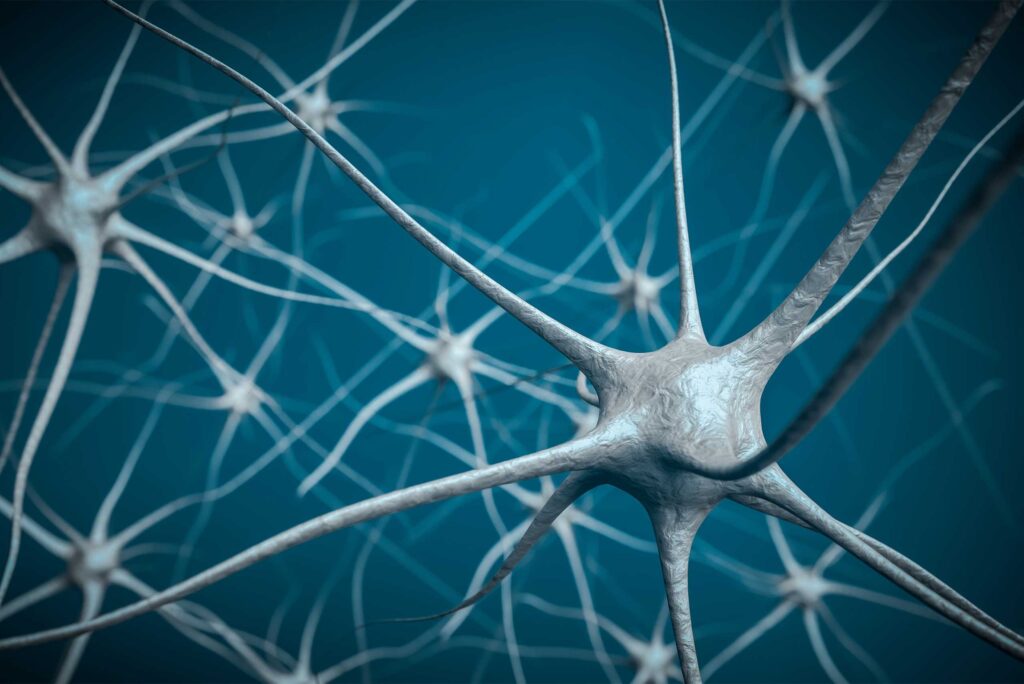
- Brain cells (neurons) communicate through small, branch-like extensions called dendrites.
- Dendrites receive signals from other neurons.
- The more complex and well-branched these structures are, known as dendritic arborization, the more efficiently neurons can communicate.
Research has associated greater dendritic complexity with:
- More flexible information processing
- Improved regulation of emotional signals
- Adaptive responses to stress
Watch a short video explanation featuring Charles Miller from Scenic City Neurotherapy.
Factors Associated With Reduced Connectivity
Research has documented that prolonged stress and emotional strain are associated with changes in dendritic structure. Over time, this may include reduced dendritic density and complexity, which is described in the literature as dendritic regression.
Changes in connectivity have been associated with:
- Rigid or repetitive thinking patterns
- Difficulty regulating emotional responses
- Reduced cognitive flexibility
- Lack of motivation to complete simple tasks
- Inability to learn and apply healthy tools and habits
This research on brain connectivity helps establish the scientific premise for the services offered at Scenic City Neurotherapy.
Ketamine and Brain Plasticity
Ketamine is studied for its association with neuroplasticity, the brain’s capacity to adapt and reorganize how it communicates. In research settings, ketamine is described as influencing:
- Glutamate-based signaling, which plays a central role in how neurons exchange information
- Pathways frequently examined in plasticity research, such as BDNF and mTOR
- Dendritic growth and synaptic connections
At Scenic City Neurotherapy, this understanding of brain connectivity and plasticity guides how our treatment approach is structured. Treatment is not framed as an experience or a mood intervention, but as a way to support the brain’s capacity to develop healthier, more adaptive communication patterns over time.
How Changes in Brain Function May Be Reflected Day to Day
Changes in brain communication are often discussed in terms of functional indicators. In other words, observable patterns related to an individual’s thoughts, feelings, and behaviors over time.
Commonly reported indicators include:
- Reduced mental rigidity or rumination
- Improved ability to pause before reacting emotionally
- Greater mental clarity or cognitive flexibility
- Improved ability to start and follow through on tasks
- Ability to learn and apply healthy tools and habits
At Scenic City Neurotherapy, these indicators are viewed as markers of brain-level functioning and are monitored longitudinally rather than evaluated based on a single infusion.
Is Ketamine a Psychedelic, or Something Else?
Ketamine is sometimes grouped with psychedelics, but it is more accurately described as a psychoplastogen, a compound that promotes rapid neural plasticity through a distinct biological pathway.
Key Mechanistic Distinctions Described in Research
Classic Psychedelics
(e.g., Psilocybin, LSD, DMT)
- Primarily activate serotonin (5-HT2A) receptors
- Effects are concentrated in relation to prefrontal and cortico-striatal circuits
- Trigger rapid but transient changes in dendritic spine growth
- Neural effects are closely tied to the acute psychedelic experience
Ketamine
- Acts primarily through glutamate-based signaling systems
- Is studied for its involvement in molecular pathways commonly examined in plasticity research, including BDNF and mTOR
- Has been associated with global network changes, including the prefrontal cortex, hippocampus, and amygdala
- Neural changes are observed over days to weeks, rather than being limited to the period of administration
Why This Distinction Is Noted
Understanding how ketamine differs from classic psychedelics helps set realistic expectations for the treatment. While classic psychedelics tend to produce their main effects during administration, ketamine works in a different way. Its effects are less about what happens in the infusion and more about how brain connections change in the days and weeks that follow.
Not everyone experiences dramatic perceptual effects during ketamine treatment. At Scenic City Neurotherapy, clinical benefit does not depend on feeling dissociated or having a hallucinogenic-type experience. Science supports the therapeutic effect is linked to what happens in the brain 24-48 hours after the infusion.
At Scenic City Neurotherapy, our MSKIT® protocol emphasizes post-stabilization support, recognizing that ketamine is typically considered within a broader, ongoing care framework.
What Does This Mean for Someone Considering Ketamine Therapy?
Research suggests that ketamine’s benefits depend not only on the drug itself, but on how care is structured around the brain’s increase in neuroplasticity. At Scenic City Neurotherapy, this is reflected in three practical elements: timing, support, and follow-up.
- Timing: Evidence supports administration of ketamine as a series of infusions, six over three weeks, to take advantage of sustained plasticity.
- Support: Patients are encouraged to work with a mental health professional outside of treatment to help consolidate maladaptive coping mechanisms and build healthier coping patterns while the brain is more adaptable.
- Follow-up: Outcomes are tracked over time using tools such as the Osmind app, with booster treatments considered as needed based on individual response.
This approach helps set clear expectations about the role of the treatment while emphasizing the importance of patient engagement outside the clinical setting.
FAQs: Our Patients Also Ask
How quickly will I see results with ketamine therapy?
Some patients notice subtle shifts within hours, while others begin to feel meaningful change gradually throughout the Stabilization Phase and beyond. There’s no standardized timeline, as individual responses naturally differ. Minimally Stimulated Ketamine Infusion Therapy (MSKIT®) opens the door for change, and your ongoing work helps guide how that change takes shape.
Is ketamine therapy safe for treating depression?
Yes. Ketamine is considered very safe for treating depression when it’s administered at low, controlled doses by trained medical professionals. Unlike many anesthetics, ketamine does not suppress breathing or heart function, and it has been safely used in medicine since the 1970s.
At Scenic City Neurotherapy, ketamine is delivered intravenously by a Certified Registered Nurse Anesthetist in a monitored medical setting with private treatment rooms, continuous vital-sign tracking, and individualized dosing based on your needs.
How long do the effects of at-home ketamine last compared to IV ketamine therapy?
Research shows that IV ketamine produces more reliable and longer-lasting effects than at-home oral ketamine. IV delivery provides 100% bioavailability, precise dosing, and medical supervision, resulting in more consistent activation of ketamine’s neuroplastic effects.
In contrast, oral at-home ketamine has lower and more variable absorption, less predictable dosing, and limited supporting evidence. Because of this, it does not replicate the neurobiological impact seen with medically supervised IV treatment.
Bringing It All Together
Ketamine is studied for how it relates to flexibility and communication of brain circuits that are commonly affected by prolonged periods of stress and adaptation. This perspective moves the conversation beyond the infusion experience and toward tracking functional indicators associated with brain-level processes over time.
At Scenic City Neurotherapy in Chattanooga, our Minimally Stimulated Ketamine Infusion Therapy (MSKIT®) and Transcranial Magnetic Stimulation (TMS) treatments are grounded in cutting-edge neuroscience and designed to help patients and referring providers better understand how to harness ketamine’s neuroplastic potential.
If you’re interested in learning more about science-informed approaches that look beyond symptom-only models, we invite you to reach out to explore whether our services may be appropriate for your needs.
About Scenic City Neurotherapy
Founded in 2019, Scenic City Neurotherapy is at the forefront of advanced and comprehensive treatments for those facing treatment-resistant conditions. Our mission is to optimize brain function and elevate well-being through cutting-edge therapies. We specialize in two pioneering approaches: Minimally Stimulated Ketamine Infusion Therapy (MSKIT®) and Transcranial Magnetic Stimulation (TMS).
If you are exploring innovative solutions for mental health, chronic pain, and other neuro-degenerative conditions, Scenic City Neurotherapy offers transformative treatment options. Join us in leading the charge towards groundbreaking brain optimization treatments and empowering individuals to reclaim their lives.
If you’re ready for treatment that’s built on proof, not trial and error, contact us today.
📞 (423) 228-0579